By The Age Less GP Dr Aparna Hegde, MBBS, FRACGP & Anti-Aging Medicine (A5M) Certification
Australia has one of the highest rates of sun damage in the world. Years of ultraviolet (UV) exposure can gradually change the structure and function of the skin, leading not only to cosmetic concerns, but also to inflammation, pigmentation disorders, vascular changes, premature ageing, and increased skin cancer risk.
For many people, sun damage shows up slowly:
- Uneven pigmentation
- Brown spots and freckles
- Redness and broken capillaries
- Rough texture
- Fine lines and wrinkles
- Loss of skin elasticity
- Dull, leathery or “weathered” skin quality
While skincare products can help support skin health, modern medical laser and IPL (Intense Pulsed Light) technologies now allow clinicians to target the deeper structural and cellular changes associated with photoageing and chronic UV exposure.
At clinics focused on skin health and healthy longevity, medical lasers are increasingly being used not simply for cosmetic improvement, but as part of a broader strategy to improve skin quality, function, and long-term skin health.
What Is Sun Damage?
Sun damage — also called photoageing — occurs when ultraviolet radiation penetrates the skin and causes cumulative injury over time.
This affects:
- Collagen and elastin fibres
- Skin pigmentation pathways
- Small blood vessels
- Cellular DNA
- Skin barrier function
- Local inflammatory processes
Unlike chronological ageing, photoageing is largely driven by environmental exposure and is often preventable.
Importantly, sun damage is not only about appearance. Chronic UV exposure accelerates oxidative stress and tissue degeneration within the skin, contributing to:
- Reduced skin resilience
- Delayed healing
- Chronic inflammation
- Increased risk of actinic keratoses and skin cancers
How Medical Lasers and IPL Work
Medical lasers and IPL systems use controlled light energy to target specific structures within the skin.
Different wavelengths can selectively target:
- Pigment (melanin)
- Redness and blood vessels
- Abnormal skin cells
- Water within tissue
- Collagen stimulation pathways
This allows clinicians to tailor treatment based on the individual’s skin type, degree of sun damage, and treatment goals.
Modern systems can improve:
- Pigmentation irregularities
- Diffuse redness
- Sun spots and age spots
- Skin texture and hydration
- Fine lines
- Collagen production
- Overall skin tone and luminosity
IPL for Pigmentation and Redness
IPL (Intense Pulsed Light) is one of the most commonly used technologies for treating diffuse sun damage.
IPL is particularly effective for:
- Sun spots
- Freckles
- Uneven pigmentation
- Facial redness
- Rosacea-associated vascular changes
- Broken capillaries
The light energy is absorbed by pigment and superficial blood vessels, allowing the body to gradually clear damaged tissue.
Many patients notice:
- Brighter skin tone
- Reduction in blotchy pigmentation
- Improved clarity
- More even complexion
IPL is often used on:
- Face
- Neck
- Chest
- Hands
- Forearms
These are typically the areas with the highest cumulative sun exposure.
Fractional Laser and Collagen Remodelling
Some laser technologies go deeper into the skin to stimulate collagen remodelling.
As collagen declines with age and UV exposure, skin gradually becomes:
- Thinner
- Less elastic
- More wrinkled
- More fragile
Fractional laser treatments create controlled microscopic zones of thermal injury within the skin. This stimulates the body’s wound healing response and promotes:
- New collagen formation
- Tissue remodelling
- Improved skin texture
- Reduction in fine lines
These treatments may also improve:
- Wrinkles
- Acne scarring
- Rough skin texture
- Enlarged pores
- Early crepey skin changes
A Medical Rather Than “Cosmetic” Perspective
There has been a major shift in how clinicians think about skin ageing.
Historically, many laser treatments were viewed primarily as cosmetic procedures. Increasingly, however, skin quality is being recognised as an important component of overall health and healthy ageing.
Healthy skin plays critical roles in:
- Immune defence
- Barrier protection
- Temperature regulation
- Sensory function
- Vitamin D metabolism
- Psychosocial wellbeing
Medical laser treatments can therefore form part of a broader evidence-based skin health strategy aimed at:
- Reducing chronic photodamage
- Supporting collagen integrity
- Improving skin resilience
- Managing inflammatory skin changes
- Encouraging preventative skin care behaviours
What Results Can Patients Expect?
Results vary depending on:
- Degree of sun damage
- Skin type
- Treatment modality
- Age
- Hormonal status
- Smoking history
- Ongoing UV exposure
- General health and nutrition
Most patients require a series of treatments for optimal outcomes.
Common improvements include:
- More even skin tone
- Reduced pigmentation
- Brighter complexion
- Smoother texture
- Reduced redness
- Improved skin firmness
- Healthier overall skin appearance
Importantly, maintenance and prevention remain essential.
Without ongoing sun protection, new damage continues to accumulate. SPF 50 is essential to block UVA and UVB.
The Importance of Medical Assessment
Not all pigmentation is benign sun damage.
A proper medical assessment and skin check is critical before commencing laser or IPL treatment to:
- Assess suitability
- Identify underlying skin conditions
- Exclude suspicious lesions or skin cancers
- Select appropriate technology and settings
- Reduce complication risk
This is particularly important in Australia, where skin cancer rates remain extremely high.
Patients should seek treatment from appropriately trained medical practitioners and qualified clinical teams using medical-grade devices to achieve lasting change.
Supporting Skin Longevity
The future of skin medicine is increasingly focused on longevity, prevention, and skin quality rather than simply appearance.
A comprehensive approach to skin health may include:
- Daily UV protection with low tx SPF 50.
- Evidence-based skincare
- Nutrition and metabolic health
- Hormonal assessment where appropriate
- Management of inflammation
- Smoking cessation
- Adequate sleep and recovery
- Medical laser and IPL therapies
When used appropriately, medical laser technologies can become a powerful tool in helping repair visible sun damage while supporting healthier, more resilient skin over time.
The Technology We Use at The Age Less Clinic & General Practice
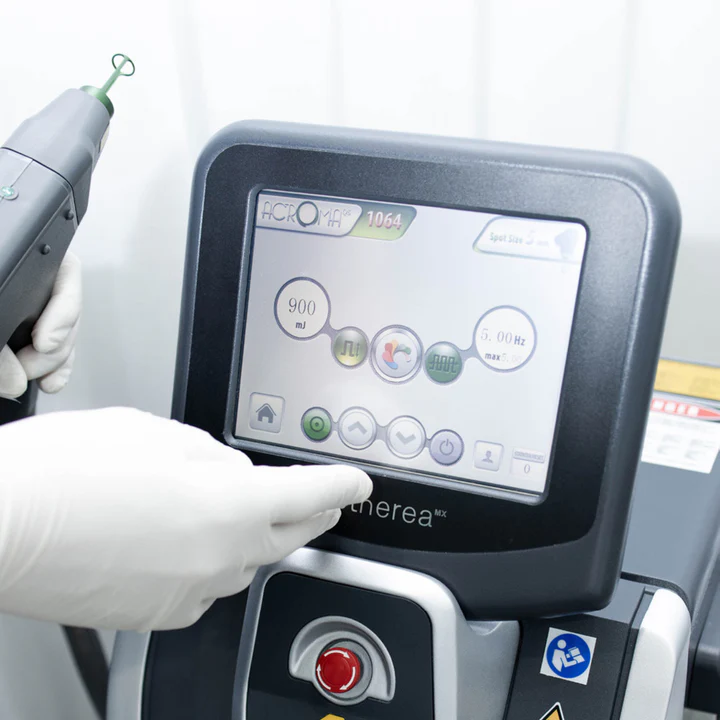
At The Age Less Clinic & General Practice, we use the VYDENCE Etherea MX platform — an advanced medical laser and light-based system designed to address a broad range of skin concerns associated with sun damage, pigmentation, vascular changes, collagen decline, and skin ageing.
One of the strengths of the Etherea MX system is its ability to combine multiple treatment technologies within a single medical platform. This allows treatments to be tailored to the individual patient’s skin type, degree of sun damage, recovery preferences, and long-term skin health goals.
Some of the key handpieces used at our clinic include:
IPL-Sq®
Suitable for Type 1-3 skin, the IPL-Sq® handpiece uses advanced Intense Pulsed Light technology to target:
- Sun spots and pigmentation
- Uneven skin tone
- Facial redness and vascular changes
- Acne-related inflammation
- Early photodamage
The square-pulse technology is designed to deliver energy more evenly and consistently, helping improve treatment precision and patient comfort.
ProDeep®
The ProDeep® handpiece is a non-ablative fractional laser designed to stimulate deeper collagen remodelling beneath the skin surface.
It is commonly used for:
- Sun-damaged skin
- Fine lines and wrinkles
- Acne scarring
- Skin texture improvement
- Tightening and laxity lipoedema
- Overall skin rejuvenation
By working deeper within the skin while leaving much of the skin surface intact, ProDeep® can help improve skin quality with comparatively reduced downtime.
DualMode®
The DualMode® Er:YAG handpiece combines ablative and coagulative effects within the same treatment pulse.
This technology may assist with:
- Pigmentation
- Skin resurfacing
- Rough skin texture
- Fine lines
- Photodamage
- Acne scars
DualMode® treatments are designed to stimulate collagen renewal while balancing treatment effectiveness with recovery time.
LongPulse®
The LongPulse® Nd:YAG handpiece is commonly used for:
- Facial redness
- Broken capillaries
- Vascular lesions
- Rosacea-associated changes
- Skin rejuvenation and thermal toning
It can target both superficial and deeper vascular structures while also contributing to collagen stimulation and overall skin quality improvement.
Rather than relying on a single technology alone, modern skin rejuvenation increasingly involves combining treatment modalities to address pigmentation, vascular changes, collagen decline, and texture changes simultaneously. This more comprehensive approach of layering different user modalities allows treatments to be customised according to each individual patient’s skin biology and skin health goals.
Final Thoughts
Sun damage is extremely common in Australia, but modern medical laser and IPL technologies now provide highly sophisticated options for treating many of its visible effects.
Beyond cosmetic improvement, these treatments can support broader skin health by improving pigmentation, vascular changes, collagen integrity, and overall skin quality.
The key is a personalised, medically guided approach focused on long-term skin health, prevention, and healthy ageing — not simply short-term cosmetic outcomes.